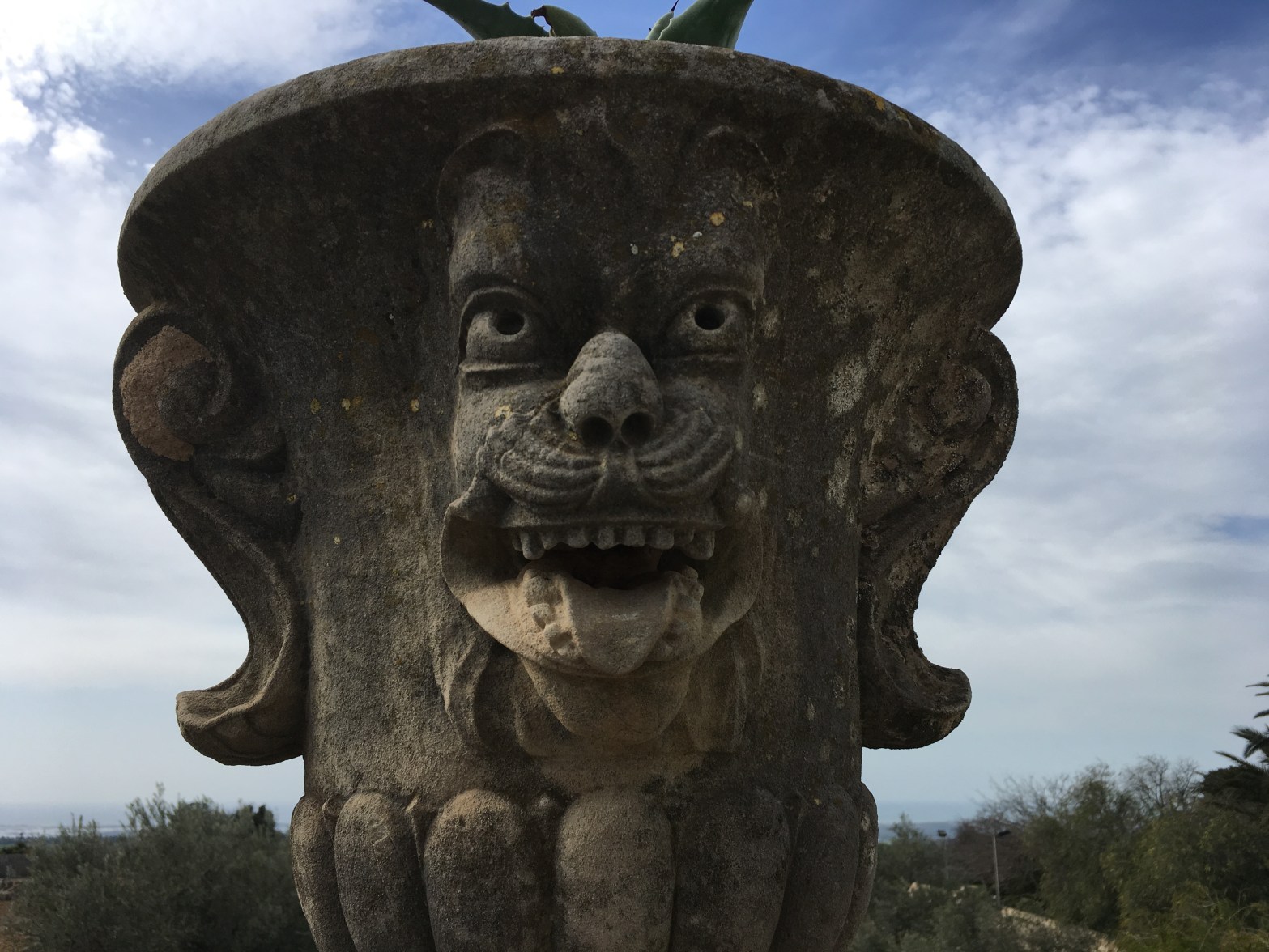
Building On The Sand

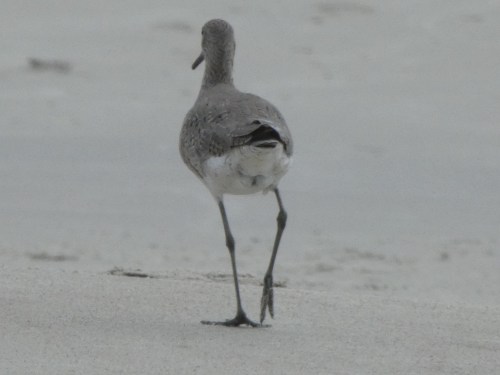
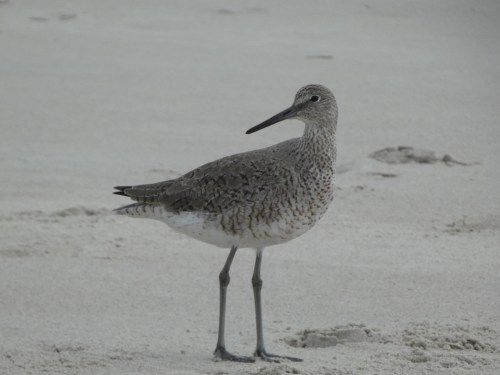
They are building high-rises on the sand,
while the powers that be look the other way.
Denying that water will take over the land;
that a monster storm could develop any day.

What do they expect to pass?
As their buildings shall not rise as a ship’s hull;
Instead they will shatter like fragile glass;
and any person who invests is a deceived gull.

Yet they continue to build more and more,
as enormous income there must be.
But when the water rushes ashore,
it will certainly all be washed out to sea.

"Progress" will not permit them to go far
away from the water that flows so deep.
Only the lack of available shoreline will bar
further development, as on building they keep.

Prompted by dVerse host Laura Bloomsbury:

  • writing an alternate rhyme poem of at least 3 stanzas
  • the rhyme scheme is ABAB; CDCD; EFEF etc.
  • We are going to borrow the alternate rhyme pairs from a published poem
  • in the order they were written
  • either a famous poem or one of our own previously published
  • do cite the source (or even post with the original in parallel)

I chose the following poem by Robert Frost:

Neither Out Far Nor In Deep

The people along the sand
All turn and look one way.
They turn their back on the land.
They look at the sea all day.

As long as it takes to pass
A ship keeps raising its hull;
The wetter ground like glass
Reflects a standing gull.

The land may vary more;
But wherever the truth may be---
The water comes ashore,
And the people look at the sea.

They cannot look out far.
They cannot look in deep.
But when was that ever a bar
To any watch they keep?


Pygmy Owl

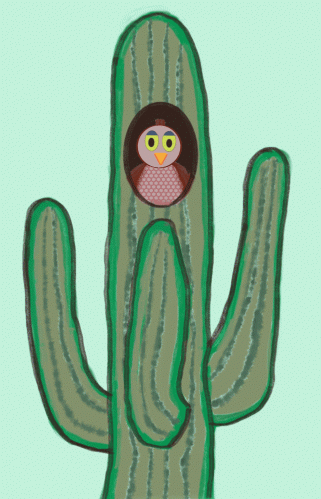
A formidable place;
I choose to reside;
But it serves as protection;
While I am inside.

I thank the woodpecker;
For the hole it had made;
In the tall cactus;
Where my nest I have laid.

So small am I;
A savory meal for some;
Yet a symbol of wisdom;
I’ve somehow become.

And from my high perch;
I can easily see;
A tasty songbird;
In a neighboring tree.

Written in response to dVerse host Kim’s prompt to write about an animal’s home.

Check out my home page for free, interactive children’s books!

Evening Primrose

By day, you are discrete and mysterious;
Mutely listening to the bustling sounds around you;
But refusing to engage with even the prettiest butterfly.
Like the evening primrose,
Your petals unfurl at dusk;
You transform into a thing of beauty;
Attracting the rare moth;
And surrounding yourself with creatures of the night.

As prompted by W3 Prompt #53: Wea’ve Written Weekly poet of the week, Brandon Ellrich.

Spelled Out

Meant to take a different route;
Am I lost?
Pondering my predicament.

Meandering about, but I seem to need
A directive of some sort;
Perhaps there is a clue.

Missing something obvious;
As if it is spelled out for me;
Puzzling to be sure.

Prompted by dVerse host whimsygizmo “Mapping. Mapped. Map it out. Write all over the map. Be a mapmaker. Whatever form of the word you choose, just be sure your poem is mapped out at just 44 words.”

Rolling Stone

A stone rolls along;
In the river’s gentle flow;
It’s a long journey.

Many obstacles;
Bumps and bruises to be sure;
Stuck and then set free.

As flow turns rapid;
The stone’s progress evident;
Destination known.

Other precious stones;
Resting on the riverbed;
Tranquil trickle touch.

Prompted by https://ronovanwrites.com/2023/04/24/ronovan-writes-weekly-haiku-poetry-prompt-challenge-459-river-and-rolls/

He Wears Black

You bring beauty, brilliance and buoyancy;
But he wears black.

You show broadmindedness, benevolence and boundlessness;
But he broods in black.

You are brave, brainy and balanced;
But he’s bemused in black.

You are breathtaking, beguiling and beloved;
But he’s bleak in black;

You have believed, begged, and bartered;
But his betrayal has born black.

You have blamed, blasted and banished,
But he is back donning black.

This was inspired by Misky’s Twiglet #322 prompt “you wear black.” I also attempted to work with consonance, as prompted by David in W3 Prompt #52: Wea’ve Written Weekly, but not sure I got that quite right.

Be the Rhythm

Living life in a bottle;
As the world gyrates to its frenetic beat.
Hips start swaying;
Feet start tapping;
Time to go bang the drum.

dVerse host Punam prompts us to write a poem incorporating two song titles by Linda Perry.

Path Of Change

I have walked this path all winter. Lackluster is how I would describe it, but it is an easy stroll and provides much needed leg stretching. The rains have come and I dare walk the path; a muddy river bottom. I see little shoots of green beginning to rise from the soil and the trees are sprouting in anticipation of spring.

A few weeks pass and I return to the path. Where did this vegetation come from? The trees are full and splendid. Colorful flower buds are tipping the abundant green foliage, threatening to open at any moment. I meander down the path that I had come to know so well over the long winter and barely recognize my surroundings.

It is now late spring and the weather is magnificent. I make my way down to the familiar path with a little “spring” in my step. Where is it? It appears my beloved trail has become a haven for shrubbery and blooming wildflowers!

Dormant it may seem;
Brewing beneath the surface;
Change is imminent.

dVerse host Linda Lee Lyburg prompts us to write a “haibun inspired by late spring”:

What Are the Main Characteristics of a Haibun Poem?

Subject matter for a haibun poem varies, however, the prose section is often dedicated to the unfolding of a scene (a memory, a particular landscape, or special moment). The prose section often consists of a few brief paragraphs written in an imagistic style (known as haikai), and normally portrays the selected scene in an objective manner. Which is why most haibun poems are written in first-person or third-person perspective.

The closing haiku appears at the end of the composition, though sometimes it can be placed in the middle, and is a thematic conversation with the prose section. It either serves as a closing statement, juxtaposition between ideas, or a philosophical innuendo that deepens the meaning of the poem.”

On The Tracks

On the tracks our love was revived;
a private compartment;
for two.
The train, it seems, served to provide
ambience for ardent
pursuit.

Diligent planning we had made;
for a trip producing
landscape.
The scenery would be betrayed
by the train’s seducing
escape.

Wea’ve Written Weekly poet of the week, Destiny, prompts us to write a “momento.”

A ‘memento’ is a poem about a holiday or an anniversary, consisting of two stanzas. Each of the two stanzas is: 

  • Six lines;
  • Syllabic: 8-6-2-8-6-2;
  • Rhyming: a/b/c/a/b/c.

Depth or Reflection

Gaze through the windows to my soul.
You may observe the presence that is

squirming beneath the surface;
Searching for a dark corner within which to retreat;
Attempting to hide from the scrutiny of your stare.
It shivers at the prospect of being discovered;
Sharing its truths and its secrets;
Exposing its vulnerability.
Or… perhaps, all you see is your own reflection.

dVerse author merrildsmith prompts us to “write about windows, real, imaginary, or metaphorical.”