Path Of Change

I have walked this path all winter. Lackluster is how I would describe it, but it is an easy stroll and provides much needed leg stretching. The rains have come and I dare walk the path; a muddy river bottom. I see little shoots of green beginning to rise from the soil and the trees are sprouting in anticipation of spring.

A few weeks pass and I return to the path. Where did this vegetation come from? The trees are full and splendid. Colorful flower buds are tipping the abundant green foliage, threatening to open at any moment. I meander down the path that I had come to know so well over the long winter and barely recognize my surroundings.

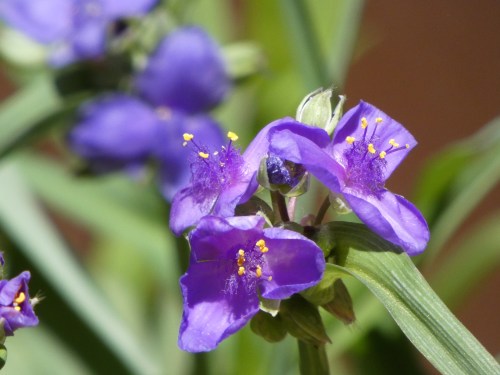
It is now late spring and the weather is magnificent. I make my way down to the familiar path with a little “spring” in my step. Where is it? It appears my beloved trail has become a haven for shrubbery and blooming wildflowers!

Dormant it may seem;
Brewing beneath the surface;
Change is imminent.

dVerse host Linda Lee Lyburg prompts us to write a “haibun inspired by late spring”:

What Are the Main Characteristics of a Haibun Poem?

Subject matter for a haibun poem varies, however, the prose section is often dedicated to the unfolding of a scene (a memory, a particular landscape, or special moment). The prose section often consists of a few brief paragraphs written in an imagistic style (known as haikai), and normally portrays the selected scene in an objective manner. Which is why most haibun poems are written in first-person or third-person perspective.

The closing haiku appears at the end of the composition, though sometimes it can be placed in the middle, and is a thematic conversation with the prose section. It either serves as a closing statement, juxtaposition between ideas, or a philosophical innuendo that deepens the meaning of the poem.”

On The Tracks

On the tracks our love was revived;
a private compartment;
for two.
The train, it seems, served to provide
ambience for ardent
pursuit.

Diligent planning we had made;
for a trip producing
landscape.
The scenery would be betrayed
by the train’s seducing
escape.

Wea’ve Written Weekly poet of the week, Destiny, prompts us to write a “momento.”

A ‘memento’ is a poem about a holiday or an anniversary, consisting of two stanzas. Each of the two stanzas is: 

  • Six lines;
  • Syllabic: 8-6-2-8-6-2;
  • Rhyming: a/b/c/a/b/c.

Depth or Reflection

Gaze through the windows to my soul.
You may observe the presence that is

squirming beneath the surface;
Searching for a dark corner within which to retreat;
Attempting to hide from the scrutiny of your stare.
It shivers at the prospect of being discovered;
Sharing its truths and its secrets;
Exposing its vulnerability.
Or… perhaps, all you see is your own reflection.

dVerse author merrildsmith prompts us to “write about windows, real, imaginary, or metaphorical.”

Nice Man

Girls 
play
out
side.
Can’t
be
more
than
the
age
of
five.
The
hot
sun
beats
on
their
feet.
They
watch
a
mint
melt
on
the
street.
The
man
in
the
car,
he
seems
nice.
One
of
the
girls
does
not
think
twice,
when
all
he
wants
is
a
quick
hand
shake.
Some
how
she
makes
a
break.
Two
young
girls
run
from
the
threat,
but
one
of
the
girls
does
not
for
get.

Form prompted by NPM Nonce Scavenger Hunt hosted by Murisopsis. I chose to use nonce form #1: “The Tail by Michael “Mouse”Murdoch – a poem of single syllable lines. Words of more than one syllable can be broken (but only if the broken syllable is a real word). Loose rhyme is expected. The theme should be a “tall tale”or at least a tale!”

Subject inspired by NaPoWriMo day nineteen daily prompt: “Now, cast your mind back to your own childhood and write a poem about something that scared you…”

Pick Me A Wildflower

Would you pick for me a fresh wildflower?
Any of the many colors will do.
A yellow cluster as a bright sunshower.
Perhaps some white lace or a blossom in blue.

An exotic bloom might be compelling;
Though the native flora are quite nice too;
A tall stemmed flower like the vendors are selling;
Of course the choice is up to you.

Perhaps you’d choose one that is sweet-smelling.
But not such a scent as to overpower.
Please now explain why you are rebelling;
When all I seek is a fresh wildflower.

Essence

Strip away the armor;
Raw.
Exposed.
Peel away the many veils;
Naked.
Humble.
Wipeout the programming;
Open.
Free.
Here I am!
There you are!

Nature Boy

Little nature boy;
Impossible to stay cleansed;
Mud is your grindstone.

A ‘Senryu’ written in response to W3 Prompt #50: Wea’ve Written Weekly’s poet of the week, Jane Aguiar. The poem must include the word impossible.

Yellow Eyes

Yellow eyes watching,
Observing the observer,
Lost in their beauty.

Written in response to dVerse author Sarah’s poetry prompt: Everything yellow.

No Control

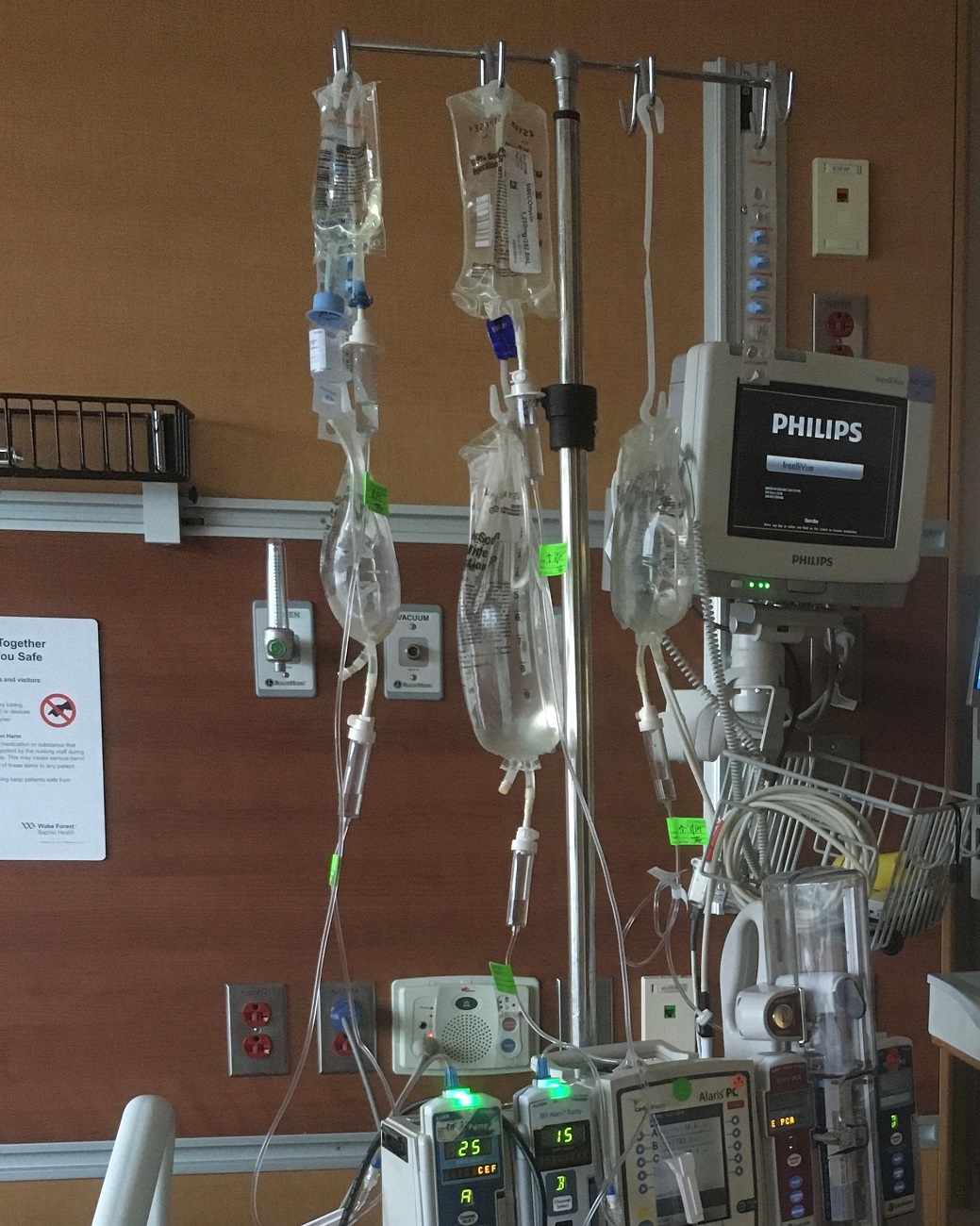
I know it appears I’m staring incoherently as I process the meaning of those jarring words. I understand what is happening; likely better than the specialists surrounding my bed, uttering conciliatory sentiments. These well-intentioned practitioners are determined to make me complacent. It is not an issue of coming to terms with my predicament. It’s a matter of losing control. Behind my stupor is a type of awakening – being in control is a farce.

Oh, we certainly have our in-control moments. We pat ourselves on the back when we curb an urge to engage in harmful behaviors or make decisions that result in positive outcomes. When life’s going well, we believe it’s to our credit. When things truly fall apart, our lack of control becomes evident. Within this harsh reality, “[t]he seed of a poem lay dormant in my heart.” It’s called resignation.


This is a rewrite in response to dVerse author Mish’s prose prompt, incorporating the line: “The seed of a poem lay dormant in my heart.” A line taken from Winged Words by Valsa George.

I wrote the original piece of prose after learning my mother’s last cancer treatment option was not working. While looking at my mother’s face as she took in the news, I felt the seed planted in my heart, waiting to bloom through written words.

Killdeer

She begs the predator moves along;
For the protection of her young.
Her mate often by her side;
But he is searching for food.
Gone! Will the hunt be successful?
When he returns, her young shall beg for nourishment.
Will it be too late? The predator approaches the ground-built nest,
The killdeer has but one option, offering herself,
She abandons the nest and appears to be an easy meal.
Flailing around with a broken wing, the predator follows the injured bird.
She offers the predator an opportunity to pounce,
A bit of excitement, as she leads the predator away from the nest; the Killdeer fluttering helplessly toward the edge of the meadow.
The moment the predator leaps upon her prey;
The bird takes flight, landing in an empty clearing;
Her nest is in view, the predator retreats;
Her chicks beg for her return as she offers a promise of sustenance to her young.

Written in response to dVerse’s MTB: Cleaving to Antonyms in Contrapuntal Lines. I have chosen to incorporate the antonyms (or forms thereof): beg – offer. The portions in bold are written from the perspective of the Killdeer and the unbolded portions are written from the perspective of the predator.